axomera
Carpal tunnel syndrome

Take a closer look at tingling in the hand.

At night the hand falls asleep, during the day the grip becomes unsteady. As a reference centre for Axomera therapy in Düsseldorf, we examine the painfully irritated region at the wrist and treat it bioelectrically — a therapeutic approach at the pain and inflammation level.

Medical content overseen by Prof. Dr. med. Albrecht Molsberger · reviewed 10/2026

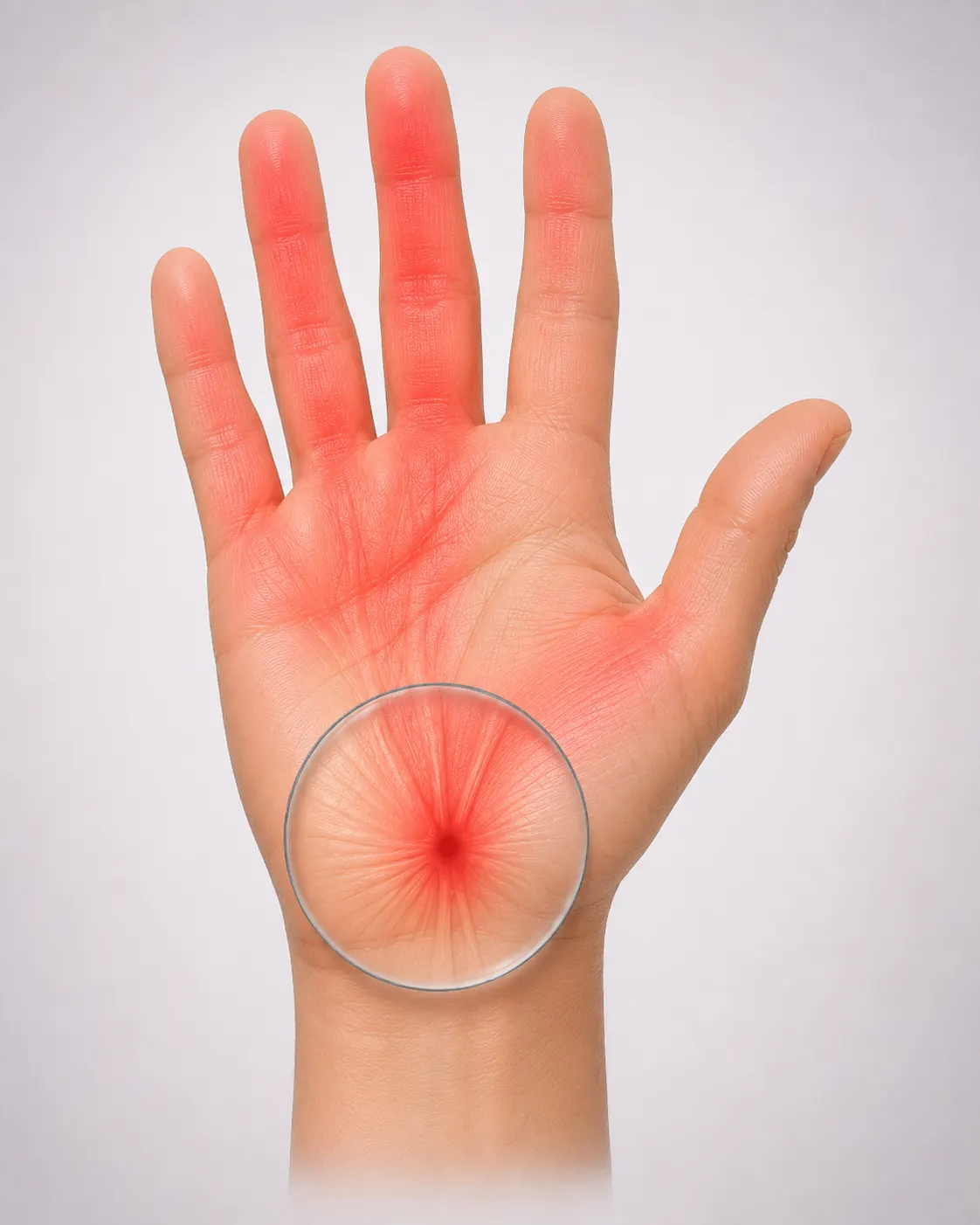
Magnifying glass over the carpal tunnel — painful region at the wrist
Clinical picture

Entrapment syndrome of the median nerve.

The Carpal tunnel syndrome is the most common nerve entrapment syndrome: the median nerve is compressed in the carpal tunnel at the wrist due to swelling after overloading or anatomical factors (e.g. scarred tissue).

Tingling and numbness in the thumb, index and middle finger are typical, especially at night, later followed by weakness of the thumb muscles.

Your medical team

Who treats you.

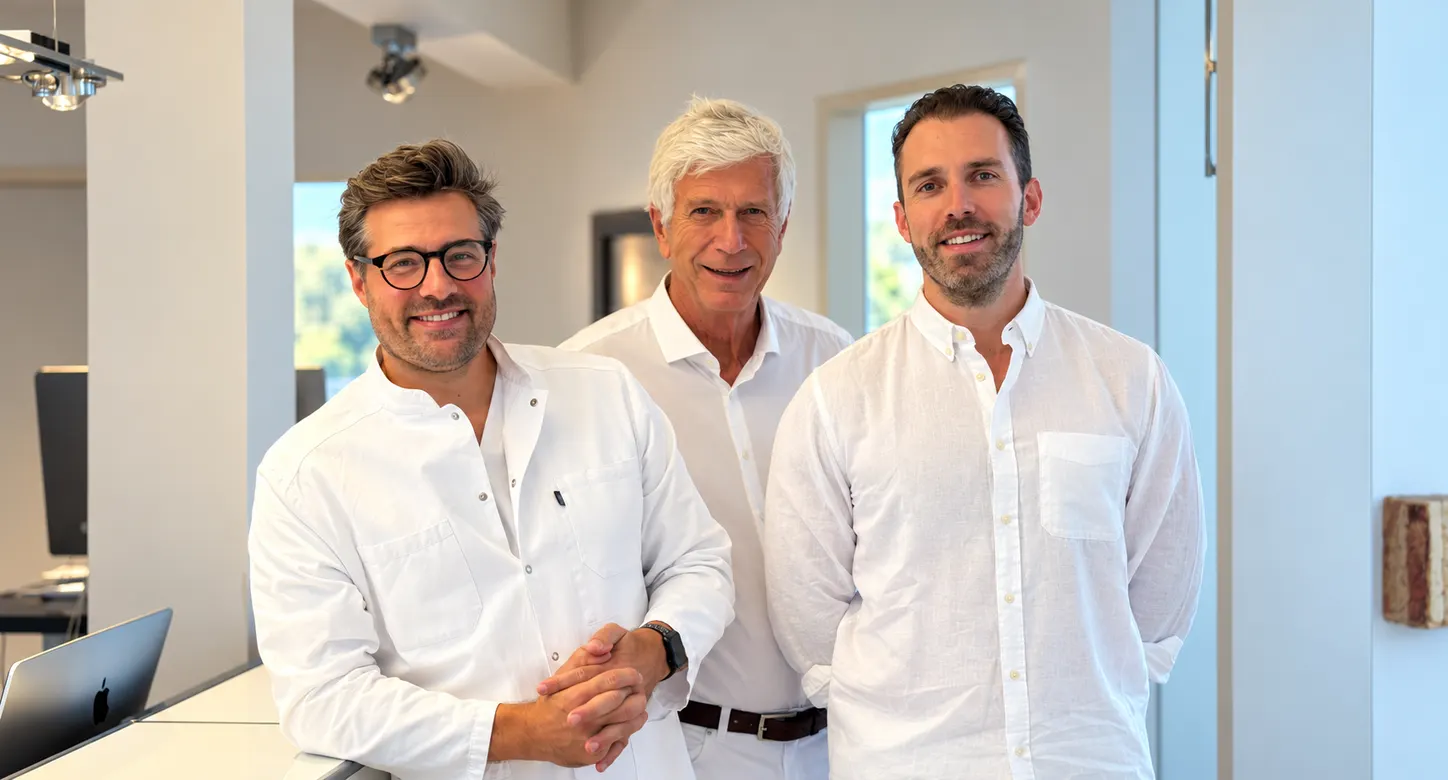
Medical team at Axomera Practice Düsseldorf: Dr. med. Philipp Schröder, Prof. Dr. med. Albrecht Molsberger and Jonas Becker
From left to right
  • Dr. med. Philipp SchröderDoctor, orthopaedics & trauma surgery (in specialist training)
  • Prof. Dr. med. Albrecht MolsbergerSpecialist in orthopaedics
    Medical Director
  • Jonas BeckerSpecialist in orthopaedics and trauma surgery

At the reference centre for Axomera therapy, you are treated by a medical team led by Prof. Molsberger.

Patients

What patients report.

Typical findings

From our patient consultations and the medical reports submitted.

  • Symptoms usually lasting for several months
  • Night-time tingling and the hand falling asleep
  • Numbness in the thumb, index and middle finger
  • Increasing weakness in the ball of the thumb
  • Triggers: overloading, incorrect posture at night
Previous therapy

Almost always in this order.

  1. Night-time wrist splint
  2. Anti-inflammatory medication / painkillers
  3. Cortisone (oral or injection into the carpal tunnel)
  4. Occupational therapy
  5. Surgery (carpal tunnel release)
Standard therapies in focus

What standard therapies really achieve.

Night splint, NSAIDs and cortisone, surgery — the three pillars of conservative and surgical care. Here is what the current evidence base shows.

Night splint: helpful in the short term, often insufficient in the long term.

A night-time wrist splint keeps the wrist in a neutral position and relieves the median nerve at night. This often relieves night-time discomfort and pain in the short term. Controlled studies show a symptomatic effect over a few weeks; robust evidence for a lasting effect over several months is missing. The night splint is a safe, cost-effective first step — for many patients, it is not sufficient as a sole long-term therapy.

Page D et al. Splinting for CTS. Cochrane Database Syst Rev. — Chesterton LS et al. INSTINCTS trial. Lancet 2018;392:1423–1433. PMC6196880.

Medication: effect usually limited to the first month.

NSAIDs (ibuprofen, naproxen, diclofenac) are frequently prescribed, but the evidence for a specific effect on carpal tunnel syndrome is weak — they alleviate acute pain, but do not address the compression of the nerve. The local cortisone injection into the carpal tunnel is the best-studied conservative measure: after one month, patients show significant improvement more often than with a placebo (relative risk 2.58; 95% CI 1.72–3.87). There is no robust evidence for a clinically relevant effect beyond the first month; a second injection also provides no significant additional benefit. Oral cortisone administration is inferior to the local injection and is not advisable for long-term use due to systemic side effects.

Marshall S et al. Local corticosteroid injection for CTS. Cochrane Database Syst Rev CD001554. — Chesterton LS et al. Lancet 2018;392:1423–1433. PMC6196880. — Babaei-Ghazani A et al. Meta-analysis, n=448. PMC8128919.

Surgery: proven — but least convincing in cases of severe findings.

Carpal tunnel surgery is among the most frequent elective procedures and provides significant improvement in night-time symptoms for most patients in the first few weeks. The complete return of strength and resilience takes several weeks to several months depending on the technique and initial severity. In long-term cohorts, reoperation rates are 1.4–4.4% (open) and 2.8–6.5% (endoscopic) respectively. Patients with electrophysiologically severe disease report significantly longer recovery times and less pain relief than patients with mild findings — precisely where the level of distress is greatest.

Wade RG et al. BJS Open 2024. PMC12284922. — Alqawasmi AS et al. 10-year follow-up, n=581. PMC12000157. — Guo D et al. J Clin Med 2024. PMC10779930. — Chapman CB et al. Hand (NY) 2012;7(3):242–246. PMC3418353.

PATIENT TESTIMONIAL ON AXOMERA THERAPY
I had been suffering from pain for five months, especially at night, and tingling in my fingers. The trigger was intensive gardening. Axomera had to be applied four times. The tingling reduced and the pain vanished. I am happy because my hand is healthy again and surgery could be avoided.
— K. M., patient at the practice

Documented individual case, with the patient's consent. Individual progress differs.

Is Axomera right for me? Initial telephone assessment →
Where we make the difference

Wrist splints and cortisone injections often only alleviate symptoms temporarily, and surgical carpal tunnel release is a step that many patients would like to delay initially.

Axomera for carpal tunnel syndrome.

In the carpal tunnel, inflamed, swollen tissue presses on the median nerve; this swelling around the nerve — not the bony constriction itself — is the treatable component in many patients. The carpal tunnel lies directly under the skin on the palm side and is easily accessible from the outside.

Axomera targets this inflamed, swollen tissue: computer-controlled electrical signals in the dimension of cellular electrical fields are placed with millimetre precision around the median nerve. The goal is to reduce the swelling and raise the nerve's irritation threshold — an anatomically fixed constriction is not removed as a result.

How inflammation and pain are connected →
„
We treat one level deeper — where the body regulates inflammation and healing itself.
Prof. Dr. Albrecht Molsberger
— Prof. Dr. Albrecht Molsberger · Developer of Axomera therapy, medical director

Axomera is an internationally patented bioelectrical procedure.

How Axomera therapy works →
Classification

Treatment trial at the pain level.

In cases of pronounced nerve damage or increasing weakness and numbness, specialist, possibly surgical, clarification is necessary. In the event of relevant neurological deficits, you should seek specialist clarification immediately. Axomera is an individual treatment trial at the pain level; background: Med Devices 2018. This neurophysiological hypothesis is empirically based on many patient cases (real-world data), not on controlled studies; as with other indications, around 20–30% of those treated do not respond. In cases of anatomically fixed nerve constriction (narrowing, scar tissue), surgery is indicated — Axomera does not replace it in this instance.

Our approach

How we proceed with you.

Every therapy needs its own examination — for us, this includes the Axomera diagnostics and the Axomera therapy.

Axomera diagnostics
  1. Secure the diagnosis and check the influence of taken medication
  2. Millimetre-precise examination — localising pain points in the irritated region of the wrist
Axomera therapy
  1. 4–6 Axomera treatments, targeted at these points
  2. Goal: significant reduction of neurogenic inflammation and pain.
  3. In favourable cases: recovery to the usual capacity to use the hand in everyday life.

Aims & course of treatment. We cannot guarantee a specific result — the progression is individual. Depending on the course of the condition, fewer or more treatments may be required.

Axomera addresses the pain and irritation component at the wrist bioelectrically — at a different level than a splint, cortisone, and surgery; a mechanical constriction of the nerve is not removed as a result.

Axomera is an internationally patented bioelectrical procedure.

How Axomera therapy works →
Your treatment team

Who treats you.

Your practitioners
Prof. Dr. med. Albrecht Molsberger

Prof. Dr. med. Albrecht Molsberger

Developer of Axomera therapy · Medical Director

As the developer of Axomera therapy, he oversees the indication and is involved in your treatment personally upon request. His experience in conservative pain medicine informs the planning of your treatment series.

Career history
  • Specialist in Orthopaedics; additional qualifications in Sports Medicine, Acupuncture, Naturopathy
  • Habilitation 2005, adjunct professorship for Orthopaedics at Ruhr University Bochum
  • Conception and management committee of the GERAC studies (German Acupuncture Trials)
  • Development of Axomera therapy since 2008
Dr. med. Philipp Schröder

Dr. med. Philipp Schröder

Doctor, orthopaedics & trauma surgery (in specialist training)

Performs your Axomera treatment and accompanies you throughout the entire treatment series. He reviews your findings and assesses whether the procedure is suitable for you. He also participates in the technical development.

Career history
  • Doctor, orthopaedics & trauma surgery (in specialist training); medical degree, Heinrich Heine University Düsseldorf, 2020
  • Doctorate magna cum laude, Ruhr University Bochum (2021): Pain localisation in cluster headache
  • Expert courses in Ultrasound in Pain Medicine (DEGUM curriculum, level I); Expert course in Sports Medicine
  • Technical co-development of Axomera therapy; co-founder of Columbus Health-Products GmbH
Further practitioner
Jonas Becker

Jonas Becker

Doctor, Specialist in Orthopaedics and Trauma Surgery

Organises your previous findings, performs Axomera diagnostics, and accompanies you throughout the entire treatment series. He reviews your findings and, based on his experience, assesses whether the procedure is suitable for you.

Contact · Online reception

Clarify first. Then travel.

Three ways to reach us, around the clock, directly here on the site. For each, you can upload doctor's letters, findings, and MRI images at the same time — encrypted into your file, reviewed by a doctor before we speak.

01 · Telephone

Briefly check if it's a fit.

Ten minutes with a doctor. Free of charge.

  • ·For those who are unsure
  • ·Upload findings beforehand
  • ·No obligation
Select phone appointment →
02 · Video

Consultation on findings without the travel.

Medical assessment via video.

  • ·For patients traveling from further away
  • ·Second opinion before making a decision
  • ·According to GOÄ, amount visible upon booking
Book video appointment →
03 · Practice

Everything in one appointment.

Examination, Axomera diagnostics, plan, costs.

  • ·For all who wish to visit
  • ·The direct route for distances up to about 100 km
  • ·Bring or upload findings
Book appointment →

Prefer personal contact? Call: +49 211 866880

Our practice treats exclusively by prior appointment.

The telephone initial assessment is not a treatment and does not replace an examination. Whether Axomera is suitable for you will be decided after a medical examination.