axomera
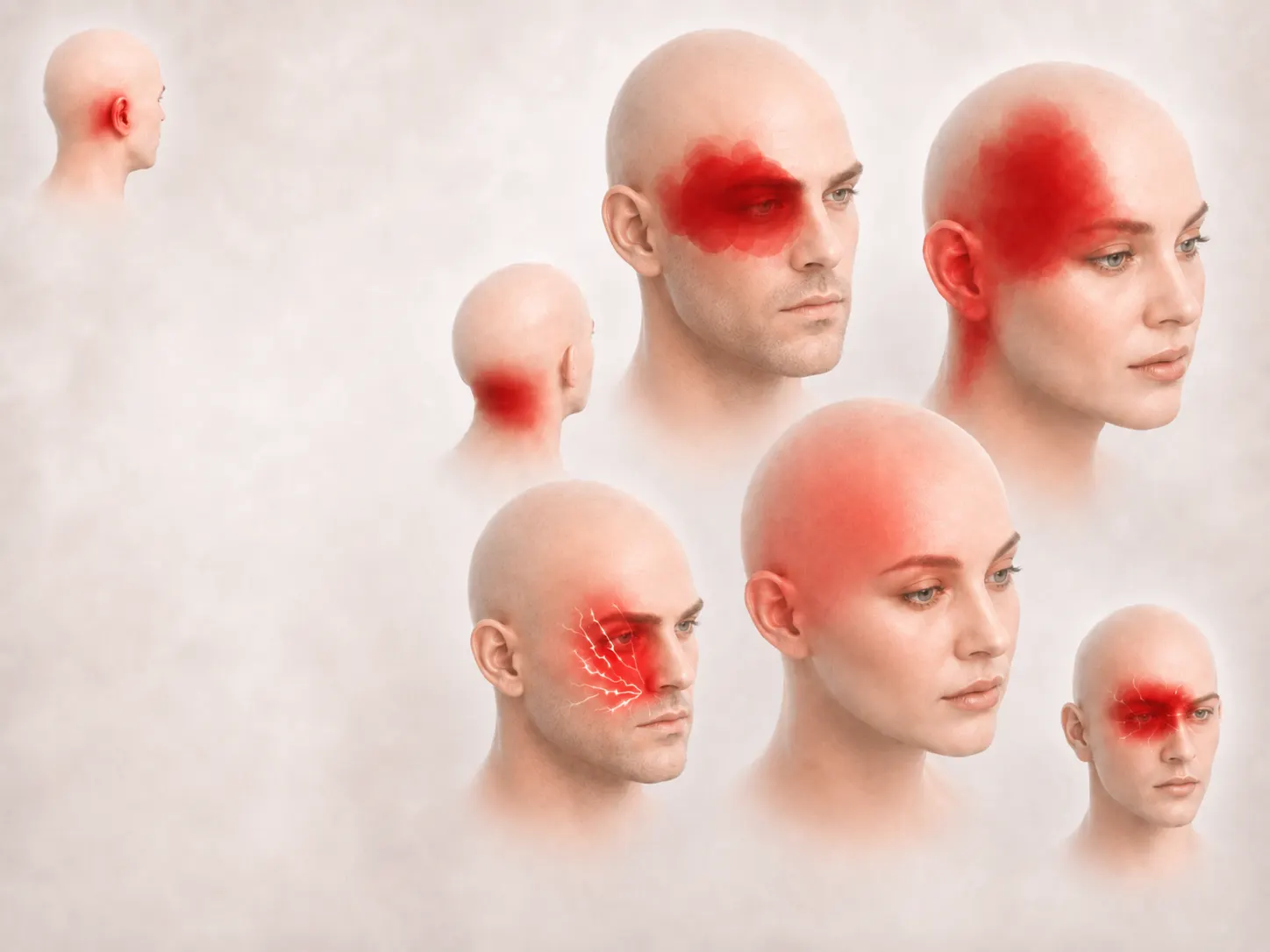
Headache focal points: Overview of pain distributions — seven head representations
Headache Centre

Specialising in the most severe headache disorders.

Our practice has developed into a headache centre over the years — through the development of Axomera therapy combined with expertise in internal medicine, orthopaedics, pain therapy, and neurology. Patients seek us out from across the entire German-speaking region, including over 200 cluster headache patients, and patients with trigeminal neuralgia and migraine. The goal of Axomera therapy is to achieve improvement, potentially leading to complete remission — and this with fewer medications, or even becoming medication-free.

Classification: Targeted goals. We cannot guarantee a specific result — clinical courses are individual. No promise of a cure.

Pain distributions · Cluster · Migraine · Tension · Trigeminal
Where we make the difference

Headache has an electrical dimension.

The standard route is pharmacological: acute therapy, then prophylaxis, often over years. Axomera approaches it differently. We place fine probes at the irritated nerve. A weak electrical field calms it. No medication. No scalpel.

„
We treat one level deeper — where the body regulates inflammation and healing itself.
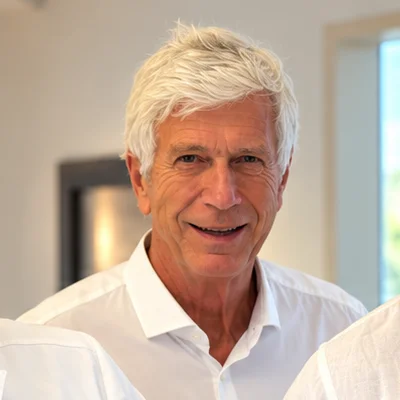
Prof. Dr. Albrecht Molsberger
— Prof. Dr. Albrecht Molsberger · Developer of Axomera therapy, medical director

Axomera is an internationally patented bioelectrical procedure.

How Axomera therapy works →
Diagnostics · Classification

Primary and secondary headache.

About 90 % of all headaches are primary — they do not have another illness as their cause; no correlate can be found in CT or MRI scans. Secondary headache, on the other hand, is based on an underlying condition, such as inflammation, a tumour, or a temporomandibular joint disorder.

Therefore, before any therapy, a clear classification is required — primary or secondary — and, if desired, a medical second opinion on existing reports.

Trigeminal autonomic cephalalgias

A family of their own — with their own logic.

Trigeminal autonomic cephalalgias include, among others, Cluster headache and the rare SUNCT syndrome — unilateral, attack-like, in the supply area of the trigeminal nerve. The Trigeminal neuralgia shows a similar distribution pattern, but according to ICHD-3 it is considered an independent diagnosis in the chapter on painful cranial nerve lesions and other facial pains — separated from both trigeminal autonomic cephalalgias and painful trigeminal neuropathy.

Based on our specialisation in this group, we also treat related, very rare forms.

Your first step

Book your appointment
and send us your reports at the same time.

Upload your reports directly when booking your appointment online.

Or call us: +49 211 866880