axomera
CRPS / Sudeck's disease

When pain persists, treatment needs a new approach

Pain, hypersensitivity, and fear of movement can permanently define life with CRPS. At the Axomera Reference Centre Düsseldorf, we rely on a targeted bioelectric therapy approach—especially for difficult, treatment-refractory cases.

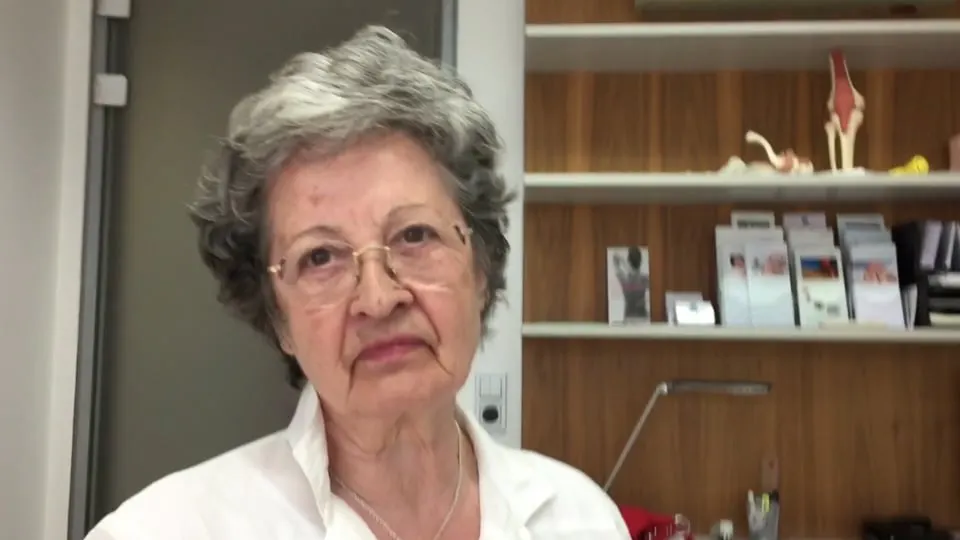
CRPS / Sudeck's disease · Vimeo

The video will only be loaded after you give your consent.

Data is transmitted to Vimeo when playing.

Source: Dr. Maquardt, OCS Düsseldorf.

Clinical picture

Burning constant pain after injury or surgery.

CRPS Type 1 often arises after an injury or operation, for example after a fall on the hand with subsequent immobilisation. It manifests as burning constant pain, swelling, skin changes, and restricted movement, which can intensify over weeks to months.

The burden of suffering is high and many cases are considered treatment-refractory.

Patients

What patients report.

Typical findings

From our patient consultations and the medical reports submitted.

  • Pain persistent and escalating since injury or surgery
  • Burning constant pain, swelling, skin changes, touch sensitivity
  • Restricted movement of the affected extremity
  • Long medical history, often experienced as “exhausted all therapeutic options”
  • High burden of suffering
Previous therapy

Almost always in this order.

  1. Immobilisation, cortisone, and high-dose painkillers
  2. Physiotherapy and occupational therapy (mirror therapy, Graded Motor Imagery), bisphosphonates, nerve pain medication
  3. Opiate infusions, sympathetic nerve blocks
  4. Spinal cord stimulation (SCS) in a specialised centre
Where we make the difference

Classic painkillers, physiotherapy, and sympathetic nerve blocks often only provide partial improvement, and more invasive procedures like spinal cord stimulation come with their own risks.

Axomera for Complex Regional Pain Syndrome (CRPS).

With CRPS, the interplay between inflammation, the nervous system, and blood flow is permanently thrown out of balance following an injury—the affected extremity remains in a self-sustaining state of hyperexcitability. The skin and soft tissues of the affected region are exposed and easily accessible for targeted bioelectric treatment.

Axomera focuses on this region: computer-controlled electrical signals in the dimension of cellular electrical fields are placed millimetre-precisely on the affected skin and soft tissue areas. The goal is to reduce hyperexcitability and interrupt the self-sustaining cycle of inflammation and pain.

How inflammation and pain are connected →
„
Inflammation has an electrical dimension. Axomera starts exactly there.
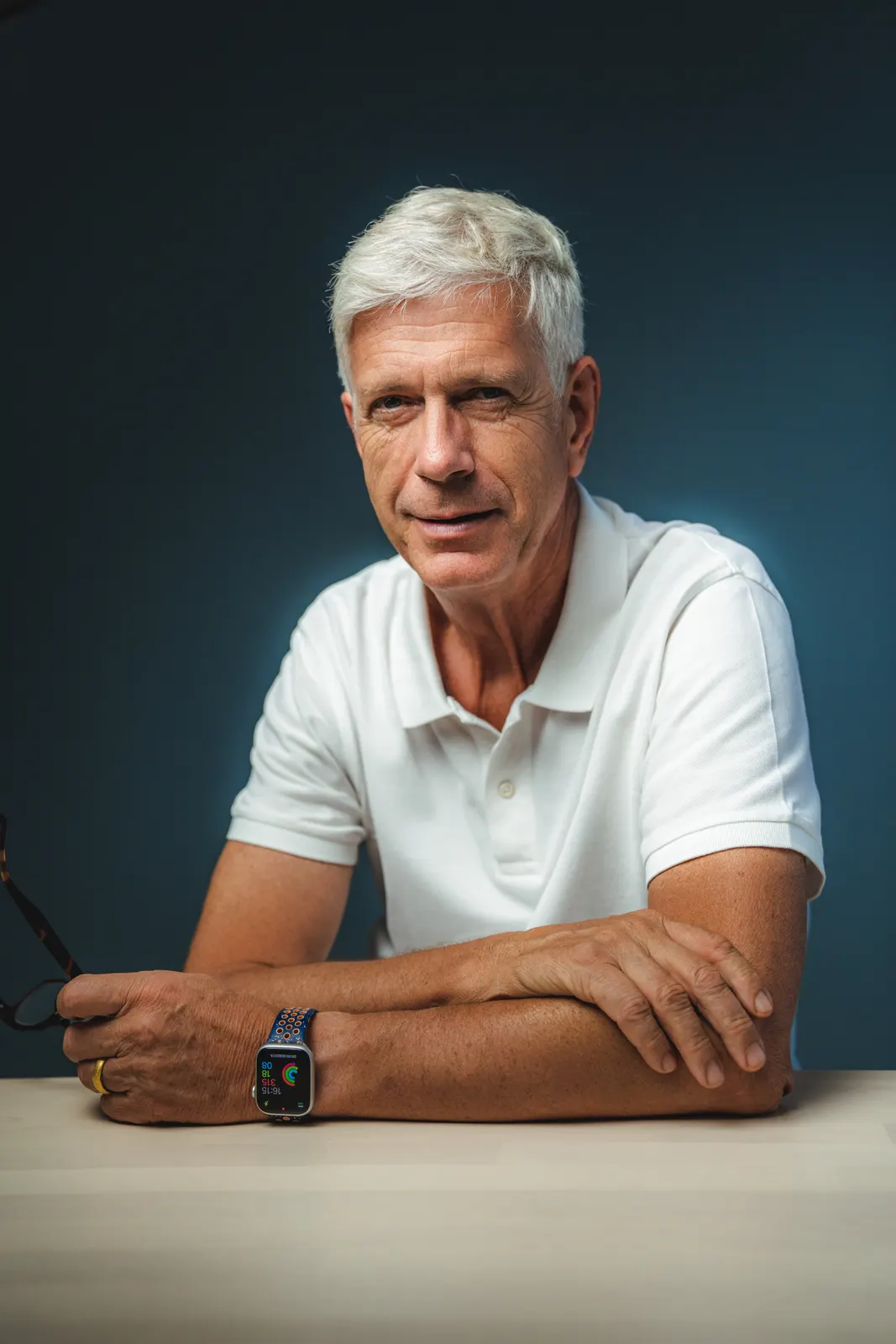
Prof. Dr. Albrecht Molsberger
— Prof. Dr. Albrecht Molsberger · Developer of Axomera therapy, medical director

Axomera is an internationally patented bioelectrical procedure.

How Axomera therapy works →
Our approach

How we proceed with you.

Every effective therapy needs a clear procedure—with us, it starts with the Axomera diagnostics and leads to the individually planned Axomera therapy.

Axomera diagnostics
  1. Secure the diagnosis and check the influence of taken medication
  2. Millimetre-precise examination—localising the pain-maintaining region of the affected extremity
Axomera therapy
  1. 4–6 Axomera treatments, targeted at these points
  2. First goal: significant reduction in pain burden
  3. Second goal: improvement of mobility and resilience

Aims & course of treatment. We cannot guarantee a specific result—cases are individual. Depending on the course of the disease, fewer or more treatments may be required.

Axomera does not just treat the pain signal. The therapy works bioelectrically one level deeper, where pain-maintaining processes are suspected—especially in cases where established procedures have not helped sufficiently.

Patients report

Individual cases.

Case study 1 · CRPS Type 1

Fall on the hand—symptom-free after eight treatments.

History & Findings

Fall on the right hand with surgical treatment of the wrist, followed by six weeks in a plaster cast. Swelling and severe pain occurred even during immobilisation; cortisone and high-dose painkillers were initiated. Further increase to the point of being unbearable over six months, most recently daily opiate infusions (Tramadol, Aspisol). Presentation with the diagnosis of CRPS Type 1: pronounced pressure pain on the extensor side over the wrist, severely restricted finger flexion, no fist closure.

Axomera therapy

On the day after the first session, the patient wrote: “The pain is 70 % better.” After the second session, all painkillers could be discontinued. A total of eight Axomera treatments within six weeks led to complete freedom from symptoms.

Practice Prof. Molsberger / Dr. Böwing, Düsseldorf—distinct individual case history.

Documented individual cases, with patient consent. Individual outcomes differ.

Is Axomera right for me? Initial telephone assessment →
Your treatment team

Who treats you.

Your practitioners
Prof. Dr. med. Albrecht Molsberger

Prof. Dr. med. Albrecht Molsberger

Developer of Axomera therapy · Medical Director

As the developer of Axomera therapy, he oversees the indication and is involved in your treatment personally upon request. His experience in conservative pain medicine informs the planning of your treatment series.

Career history
  • Specialist in Orthopaedics; additional qualifications in Sports Medicine, Acupuncture, Naturopathy
  • Habilitation 2005, adjunct professorship for Orthopaedics at Ruhr University Bochum
  • Conception and management committee of the GERAC studies (German Acupuncture Trials)
  • Development of Axomera therapy since 2008
Dr. med. Philipp Schröder

Dr. med. Philipp Schröder

Doctor, orthopaedics & trauma surgery (in specialist training)

Performs your Axomera treatment and accompanies you throughout the entire treatment series. He reviews your findings and assesses whether the procedure is suitable for you. He also participates in the technical development.

Career history
  • Doctor, orthopaedics & trauma surgery (in specialist training); medical degree, Heinrich Heine University Düsseldorf, 2020
  • Doctorate magna cum laude, Ruhr University Bochum (2021): Pain localisation in cluster headache
  • Expert courses in Ultrasound in Pain Medicine (DEGUM curriculum, level I); Expert course in Sports Medicine
  • Technical co-development of Axomera therapy; co-founder of Columbus Health-Products GmbH
Further practitioner
Jonas Becker

Jonas Becker

Doctor, Specialist in Orthopaedics and Trauma Surgery

Organises your previous findings, performs Axomera diagnostics, and accompanies you throughout the entire treatment series. He reviews your findings and, based on his experience, assesses whether the procedure is suitable for you.

Contact · Online reception

Clarify first. Then travel.

Three ways to reach us, around the clock, directly here on the site. For each, you can upload doctor's letters, findings, and MRI images at the same time — encrypted into your file, reviewed by a doctor before we speak.

01 · Telephone

Briefly check if it's a fit.

Ten minutes with a doctor. Free of charge.

  • ·For those who are unsure
  • ·Upload findings beforehand
  • ·No obligation
Select phone appointment →
02 · Video

Consultation on findings without the travel.

Medical assessment via video.

  • ·For patients traveling from further away
  • ·Second opinion before making a decision
  • ·According to GOÄ, amount visible upon booking
Book video appointment →
03 · Practice

Everything in one appointment.

Examination, Axomera diagnostics, plan, costs.

  • ·For all who wish to visit
  • ·The direct route for distances up to about 100 km
  • ·Bring or upload findings
Book appointment →

Are you traveling from further away? Start with 01 or 02. Only when it is clear that Axomera is suitable for you do we plan the journey — condensed into a few days. Available internationally as a concierge service upon request.

Prefer personal contact? Call: +49 211 866880

Our practice treats exclusively by prior appointment.

The telephone initial assessment is not a treatment and does not replace an examination. Whether Axomera is suitable for you will be decided after a medical examination.