axomera
Thumb base osteoarthritis

The thumb hurts with every grip. We find the point.

Opening a jar, turning a key — with thumb base osteoarthritis, this is often no longer possible without help. As an Axomera therapy reference centre, we precisely isolate the inflamed tissue at the base of the thumb and treat it bio-electrically, without cortisone.

Medical content overseen by Prof. Dr. med. Albrecht Molsberger · reviewed 10/2026

Data is transmitted to Vimeo when playing.

Clinical picture

Wear at the thumb saddle joint.

The Thumb base osteoarthritis is wear of the thumb saddle joint (carpometacarpal joint I) with progressive cartilage damage and irritation of the surrounding joint structures.

Typical symptoms are pain at the ball of the thumb when gripping, turning, and clutching, as well as diminishing strength.

Your medical team

Who treats you.

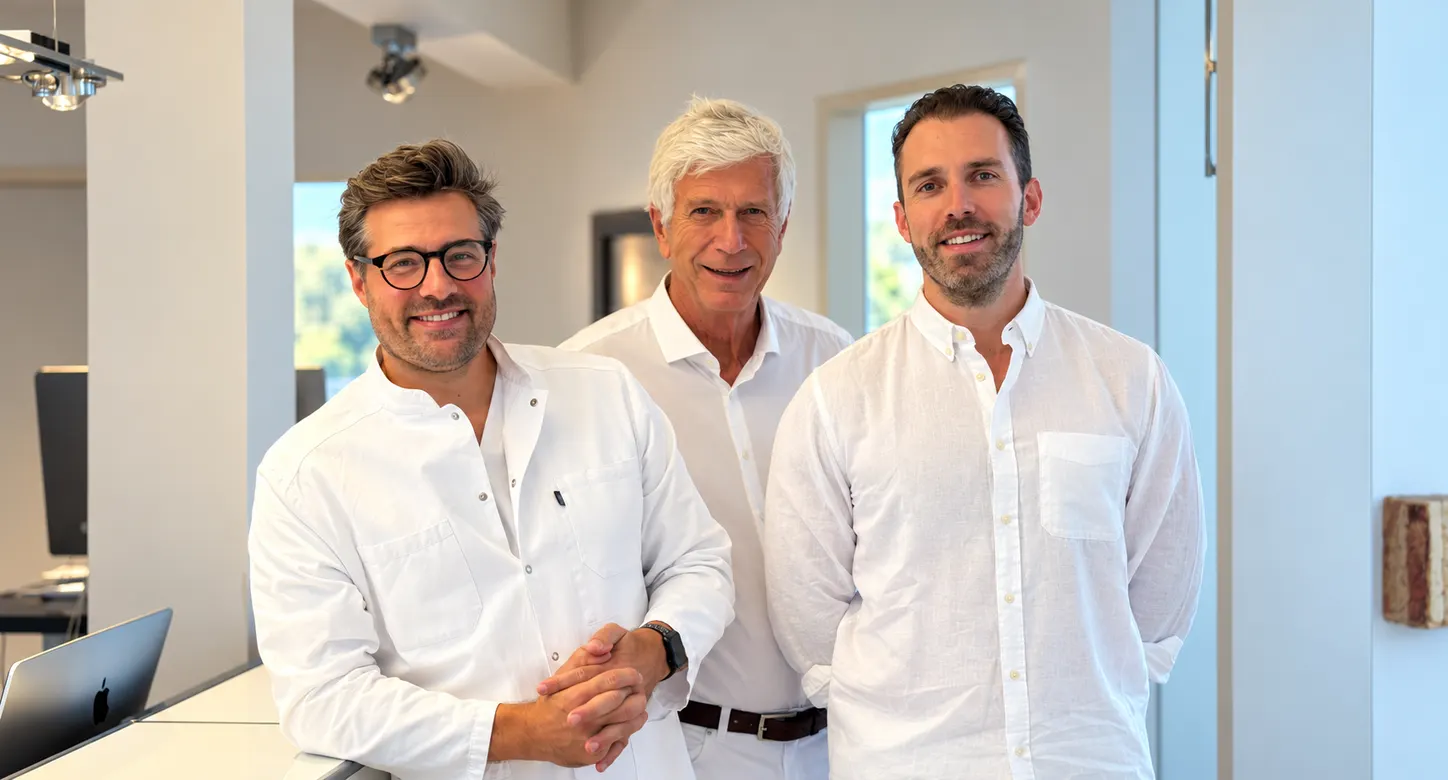
Medical team at Axomera Practice Düsseldorf: Dr. med. Philipp Schröder, Prof. Dr. med. Albrecht Molsberger and Jonas Becker
From left to right
  • Dr. med. Philipp SchröderDoctor, orthopaedics & trauma surgery (in specialist training)
  • Prof. Dr. med. Albrecht MolsbergerSpecialist in orthopaedics
    Medical Director
  • Jonas BeckerSpecialist in orthopaedics and trauma surgery

At the reference centre for Axomera therapy, you are treated by a medical team led by Prof. Molsberger.

Patients

What patients report.

Typical findings

From our patient consultations and the medical reports submitted.

  • Complaints usually for several months to years
  • Often multiple doctors and prior treatments
  • Pain at the base of the thumb when gripping, opening jars, turning keys
  • Loss of strength in the thumb
  • Triggers: exertion and wear
Previous therapy

Almost always in this order.

  1. Pain-killing and anti-inflammatory medication
  2. Thumb orthosis / splint (immobilisation)
  3. Ergotherapy and hand therapy
  4. Cortisone injection into the saddle joint
  5. Surgery (e.g. resection / prosthesis)
Standard therapy

How is thumb base osteoarthritis treated?

01First, relieve the joint

At the beginning is the conservative basis: relieve the thumb saddle joint in everyday life, adapt strenuous gripping and turning movements, and support the joint with an orthosis — a supportive thumb brace — stabilise. Supplement with exercises for strength and mobility. European professional recommendations (EULAR 2018) explicitly place these non-pharmacological measures — education, aids, exercises, orthoses — at the start of every treatment.

02Damping pain and inflammation

If relief is insufficient, anti-inflammatory painkillers are added. According to EULAR, topically applied antirheumatics (topical NSAIDs, such as gel) are the first-line treatment because they place less strain on the body than tablets. Oral NSAIDs are used for a limited time for symptom relief; chondroitin sulphate may be considered for relief. Important: These agents alleviate symptoms — they do not stop the wear itself.

03The cortisone injection — what it really achieves

In cases of thumb base osteoarthritis, cortisone is often injected directly into the joint. The controlled evidence for this is sobering. In the most significant randomised double-blind study to date (Meenagh et al. 2004, 40 patients with moderate to severe thumb base osteoarthritis), a cortisone injection (triamcinolone) compared to a saline placebo injection over 24 weeks showed no measurable benefit regarding pain, stiffness, or function.

Professional recommendations are correspondingly cautious: EULAR 2018 generally advises against cortisone injections for hand osteoarthritis — it can only be considered in individual cases for joints with significant inflammatory activity. Short-term relief during an acute flare-up is possible; a lasting or reproducibly proven benefit is not.

04Surgery — when, which one, how well evidenced

If pronounced symptoms persist despite consistent conservative treatment, surgery may become appropriate. Three questions are worth asking beforehand.

When? Usually in cases of advanced joint wear (Stage III–IV according to Eaton/Littler) with persistent pain and loss of function — and only after relief, bracing, and medication have not helped sufficiently over several months. The declared goal of the intervention is pain relief, not the restoration of the original mobility (as per the EULAR recommendation).

Which method? The most widely used and established reference is the trapeziectomy — the removal of the trapezium bone at the base of the thumb. It is performed either alone or supplemented with additional ligament and tendon reconstruction (in technical terms, LRTI, “ligament reconstruction and tendon interposition”) or with a suspensionplasty, in which a strip of the patient's own tendon supports the thumb. In addition, there is fusion (arthrodesis) and joint replacement (prosthesis).

How well evidenced? Surprisingly thin. The authoritative Cochrane review (Wajon et al. 2015) summarised 11 randomised studies with 670 operated individuals. Their result: No surgical method was superior to another regarding pain and function; the simple trapeziectomy had fewer complications than the more complex variant with ligament and tendon reconstruction. The quality of the studies was low overall. Especially remarkable is what is missing: there are practically no randomised studies comparing surgery directly with non-operative treatment. Whether and from when surgery is superior to further conservative treatment has therefore not been answered to this day by high-quality studies. Recovery after the procedure extends over months.

Kloppenburg M et al. 2018 update of the EULAR recommendations for hand osteoarthritis. Ann Rheum Dis 2019;78(1):16–24. PMID 30154087. — Meenagh GK et al. RCT intra-articular corticosteroid injection thumb CMC, n=40, 24-week follow-up. Ann Rheum Dis 2004;63(10):1260–1263. PMID 15361383. — Wajon A et al. Surgery for thumb (trapeziometacarpal joint) osteoarthritis. Cochrane Database Syst Rev 2015;(2):CD004631. PMID 25702783. — Eaton RG, Glickel SZ. Trapeziometacarpal osteoarthritis staging. Hand Clin 1987;3(4):455–471. — Eaton RG, Littler JW. Ligament reconstruction for painful thumb CMC. J Bone Joint Surg Am 1973;55(8):1655–1666.

Where we make the difference

Braces, anti-inflammatory ointments and cortisone injections often only temporarily relieve the pain at the thumb saddle joint; repeated injections can further weaken the cartilage, and in the end, when symptoms persist, the question of surgery usually arises.

Axomera for thumb base osteoarthritis.

At the thumb saddle joint (carpometacarpal joint I), as cartilage wear progresses, bone increasingly rubs on bone; the joint capsule and surrounding soft tissue react with chronic inflammation, which creates the actual pain upon movement during gripping and turning. Because this joint lies directly under the skin at the thumb base, the capsule and ligament region is very precisely accessible from the outside.

Axomera starts precisely in this region: computer-controlled electrical signals in the dimension of cellular electrical fields are placed millimetre-precisely at the capsule and ligament attachments of the thumb saddle joint. The goal is to shift the inflammation-regeneration balance back in favour of healing — not to reverse the cartilage wear itself. In favourable courses, pain relief can last for months to years and delay a surgical intervention. This neurophysiological hypothesis is also empirically grounded by many patient courses (real-world data), not by controlled studies; as with other indications, around 20–30% of those treated do not respond.

How inflammation and pain are connected →
„
We treat one level deeper — where the body regulates inflammation and healing itself.
Prof. Dr. Albrecht Molsberger
— Prof. Dr. Albrecht Molsberger · Developer of Axomera therapy, medical director

Axomera is an internationally patented bioelectrical procedure.

How Axomera therapy works →
Our approach

How we proceed with you.

Every therapy needs its own examination — for us, this includes the Axomera diagnostics and the Axomera therapy.

Axomera diagnostics
  1. Secure the diagnosis and check the influence of taken medication
  2. Millimetre-precise examination — localising pain points at the thumb saddle joint and in the surrounding region
Axomera therapy
  1. 4–6 Axomera treatments, targeted at these points
  2. Goal: significant reduction of pain and irritation
  3. In favourable courses: less painful gripping in everyday life

Aims & course of treatment. We cannot guarantee a specific result — the progression is individual. Depending on the course of the condition, fewer or more treatments may be required.

Goal: reduce painkillers and delay an operation, if it is necessary at all.

Patients report

Individual cases.

For two years, increasingly stronger pain in the thumb, every time I gripped something it hurt. After two Axomera sessions — first improvement after one day — I was able to grip again. Doctor's report: despite polyarthritis, subsequently lasting significantly fewer complaints at the thumb saddle joint.
Individual case

“Can finally grip again.”

Patient, 65 — identified individual case from the practice.

Documented individual cases, with patient consent. Individual outcomes differ.

Is Axomera right for me? Initial telephone assessment →
Your treatment team

Who treats you.

Your practitioners
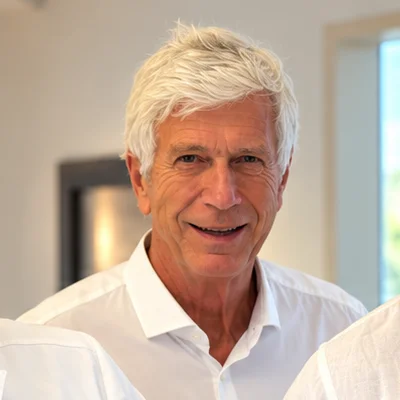
Prof. Dr. med. Albrecht Molsberger

Prof. Dr. med. Albrecht Molsberger

Developer of Axomera therapy · Medical Director

As the developer of Axomera therapy, he oversees the indication and is involved in your treatment personally upon request. His experience in conservative pain medicine informs the planning of your treatment series.

Career history
  • Specialist in Orthopaedics; additional qualifications in Sports Medicine, Acupuncture, Naturopathy
  • Habilitation 2005, adjunct professorship for Orthopaedics at Ruhr University Bochum
  • Conception and management committee of the GERAC studies (German Acupuncture Trials)
  • Development of Axomera therapy since 2008
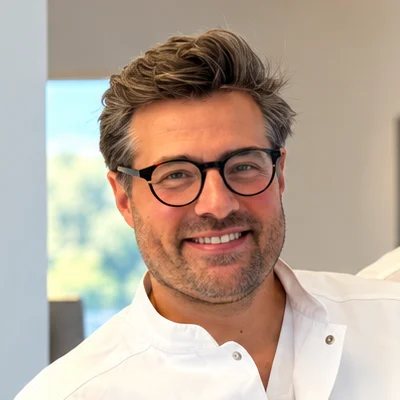
Dr. med. Philipp Schröder

Dr. med. Philipp Schröder

Doctor, orthopaedics & trauma surgery (in specialist training)

Performs your Axomera treatment and accompanies you throughout the entire treatment series. He reviews your findings and assesses whether the procedure is suitable for you. He also participates in the technical development.

Career history
  • Doctor, orthopaedics & trauma surgery (in specialist training); medical degree, Heinrich Heine University Düsseldorf, 2020
  • Doctorate magna cum laude, Ruhr University Bochum (2021): Pain localisation in cluster headache
  • Expert courses in Ultrasound in Pain Medicine (DEGUM curriculum, level I); Expert course in Sports Medicine
  • Technical co-development of Axomera therapy; co-founder of Columbus Health-Products GmbH
Further practitioner
Jonas Becker

Jonas Becker

Doctor, Specialist in Orthopaedics and Trauma Surgery

Organises your previous findings, performs Axomera diagnostics, and accompanies you throughout the entire treatment series. He reviews your findings and, based on his experience, assesses whether the procedure is suitable for you.

Contact · Online reception

Clarify first. Then travel.

Three ways to reach us, around the clock, directly here on the site. For each, you can upload doctor's letters, findings, and MRI images at the same time — encrypted into your file, reviewed by a doctor before we speak.

01 · Telephone

Briefly check if it's a fit.

Ten minutes with a doctor. Free of charge.

  • ·For those who are unsure
  • ·Upload findings beforehand
  • ·No obligation
Select phone appointment →
02 · Video

Consultation on findings without the travel.

Medical assessment via video.

  • ·For patients traveling from further away
  • ·Second opinion before making a decision
  • ·According to GOÄ, amount visible upon booking
Book video appointment →
03 · Practice

Everything in one appointment.

Examination, Axomera diagnostics, plan, costs.

  • ·For all who wish to visit
  • ·The direct route for distances up to about 100 km
  • ·Bring or upload findings
Book appointment →

Prefer personal contact? Call: +49 211 866880

Our practice treats exclusively by prior appointment.

The telephone initial assessment is not a treatment and does not replace an examination. Whether Axomera is suitable for you will be decided after a medical examination.