A twist happens quickly — and the consequences persist if the ligament does not get a chance to rest. For sprains and lateral ligament tears at the ankle, we find the affected area and use Axomera early on, with the goal of reducing swelling and pain and accelerating the return to sport.
„
Twisted it while playing tennis, severe pain, crutches necessary. An Axomera treatment two days after the injury — significantly less pain and swelling the next day. Back to playing tennis pain-free after just over two weeks.
Patient, 65 · Ligament tear & sprain
Documented individual case, with the patient's consent. Individual recovery paths differ.
Case study · Athlete, 25
Ligament tear in the foot — back to sport faster.
Initial findings
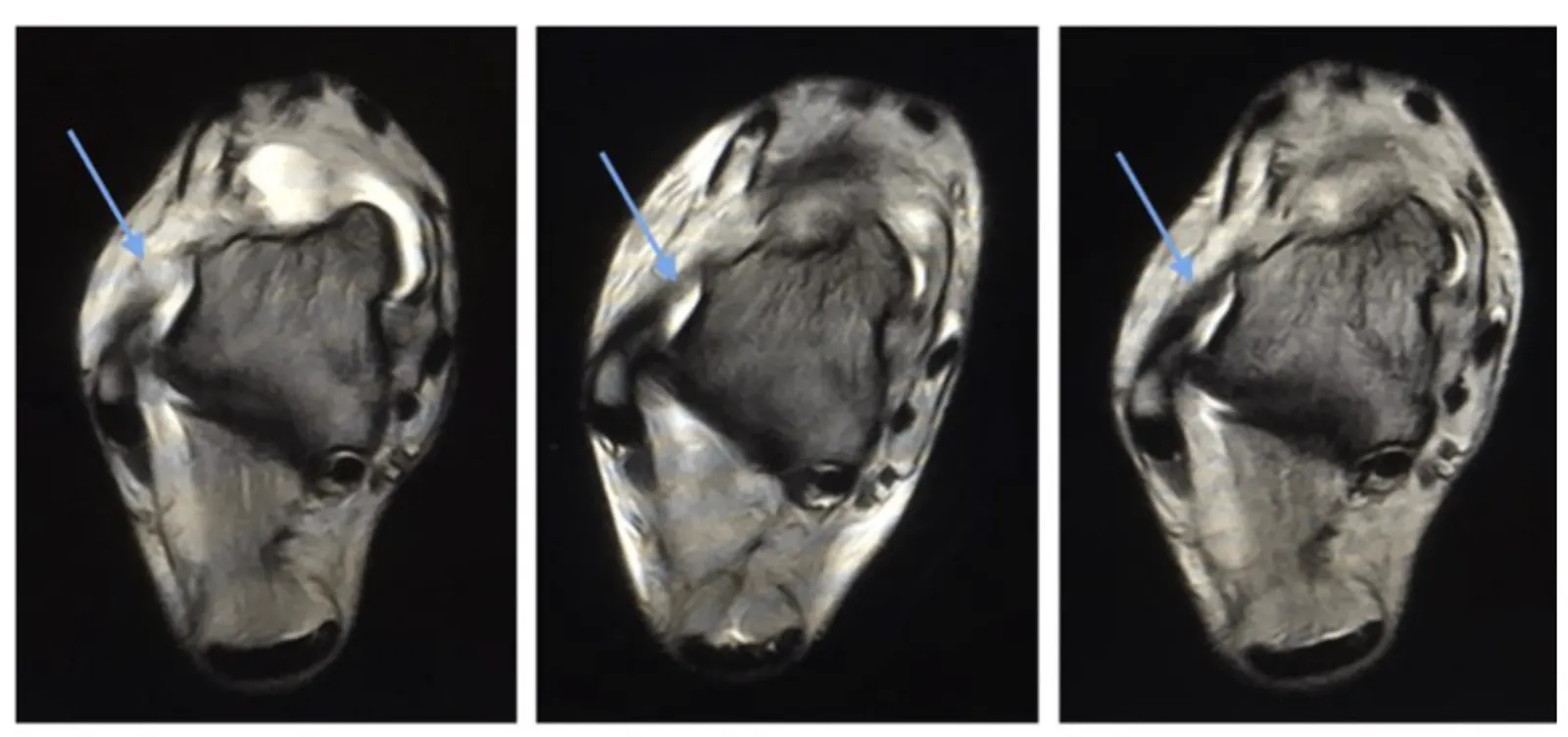
During a football match, a 25-year-old player sustained a severe supination trauma of the ankle — severe swelling and pain, walking only possible with crutches. The MRI showed a complete tear of the lateral ligament (anterior talofibular ligament).
Axomera course
First Axomera treatment on the day of the trauma, two further ones on day 4 and day 10. Significantly less pain and swelling immediately after the first session, walking without crutches possible immediately. Almost pain-free on day 4, symptom-free on day 10 with the desire to resume football training.
Day 0 · before treatment. Complete rupture of the anterior talofibular ligament (arrow).
Day 14 · follow-up. Visibly advanced regeneration of the ligament (arrow).
Week 6 · follow-up. Ligament structure in the follow-up MRI largely regenerated (arrow).
Lateral ligament regeneration with signs of reduced scar formation. MRI progression of the lateral ligament at the ankle — documented individual case from Dr. med. Andreas Graeb, Orthopaedics Gauting–Starnberg. With the patient's consent. Individual recovery paths differ.
Clinical picture
Lateral ligament injury after twisting.
Ligament injuries of the foot usually affect the lateral ligament of the ankle and are caused by twisting (supination trauma); ranging in severity from a strain to a lateral ligament rupture.
Typical symptoms are swelling, bruising, tenderness, and insecurity when stepping down — in sports, longer recovery times are a risk.
Patients
What patients report.
Typical findings
From our patient consultations and the medical reports submitted.
Acute injury after twisting
Swelling, bruising, tenderness on the outside of the ankle
05Surgery (rare, for complete rupture / chronic instability)
Where we make the difference
Tape and braces stabilise the joint but provide no information on how stable the newly formed ligament tissue really is under load.
Axomera for sprains and ligament tears.
After a ligament tear at the ankle, it is decided in the first few days whether the infiltrating repair tissue will heal with load-bearing stability or whether instability will remain. The torn ligament lies close to the surface at the lateral malleolus and is precisely localisable from the outside.
Axomera begins early at this ligament tissue: computer-controlled electrical signals in the dimension of cellular electrical fields are placed with millimetre precision at the injured ligament. The goal is to support tissue remodelling in such a way that a more load-stable ligament with less scar tissue is created. This neurophysiological hypothesis is empirically supported by many patient cases (real-world data), not by controlled trials; as with other indications, around 20–30% of those treated do not respond.
Every therapy needs its own examination — precise Axomera diagnostics before the Axomera therapy.
Axomera diagnostics
01Secure the diagnosis and check the influence of taken medication
02Millimetre-precise examination — localise the affected spot in the ligament and soft tissue at the ankle
Axomera therapy
034–6 Axomera treatments, targeted at these points
04Goal: significant reduction of pain and swelling
05In favourable cases: faster and coordinated “Return to desired sports”
Aims & course of treatment. We cannot guarantee a specific result — the progression is individual. Depending on the course of the condition, fewer or more treatments may be required.
Axomera is used early on the injured ligament tissue and coordinated with the build-up of load — one level deeper than rest and painkillers. Axomera modulates the control of inflammation and healing bioelectrically. The procedure is non-drug-based and is not on the NADA/WADA doping list.
Axomera is an internationally patented bioelectrical procedure.
Pain in both feet for ten years, especially when standing and walking for long periods — burdensome as a teacher. After X-rays, MRI and arthroscopy, an artificial ankle joint was recommended to me. The first Axomera treatment three years ago; afterwards largely symptom-free for about one to one and a half years. A refresher worked just as well — I need four to six treatments each time.
Patient, 58 · Ankle osteoarthritis
Pain with ankle osteoarthritis.
Treatment for 3 years — documented individual case.
Documented individual cases, with patient consent. Individual outcomes differ.
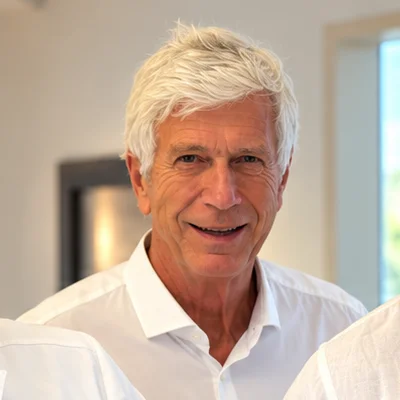
As the developer of Axomera therapy, he oversees the indication and is involved in your treatment personally upon request. His experience in conservative pain medicine informs the planning of your treatment series.
Career history +
Specialist in Orthopaedics; additional qualifications in Sports Medicine, Acupuncture, Naturopathy
Habilitation 2005, adjunct professorship for Orthopaedics at Ruhr University Bochum
Conception and management committee of the GERAC studies (German Acupuncture Trials)
Development of Axomera therapy since 2008
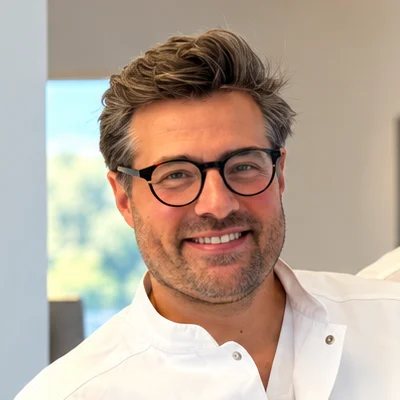
Dr. med. Philipp Schröder
Doctor, orthopaedics & trauma surgery (in specialist training)
Performs your Axomera treatment and accompanies you throughout the entire treatment series. He reviews your findings and assesses whether the procedure is suitable for you. He also participates in the technical development.
Career history +
Doctor, orthopaedics & trauma surgery (in specialist training); medical degree, Heinrich Heine University Düsseldorf, 2020
Doctorate magna cum laude, Ruhr University Bochum (2021): Pain localisation in cluster headache
Expert courses in Ultrasound in Pain Medicine (DEGUM curriculum, level I); Expert course in Sports Medicine
Technical co-development of Axomera therapy; co-founder of Columbus Health-Products GmbH
Further practitioner
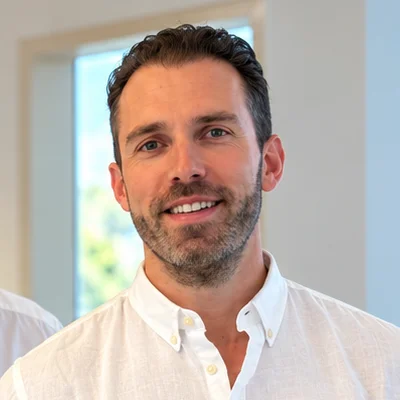
Jonas Becker
Doctor, Specialist in Orthopaedics and Trauma Surgery
Organises your previous findings, performs Axomera diagnostics, and accompanies you throughout the entire treatment series. He reviews your findings and, based on his experience, assesses whether the procedure is suitable for you.
Contact · Online reception
Clarify first. Then travel.
Three ways to reach us, around the clock, directly here on the site. For each, you can upload doctor's letters, findings, and MRI images at the same time — encrypted into your file, reviewed by a doctor before we speak.
Are you traveling from further away? Start with 01 or 02. Only when it is clear that Axomera is suitable for you do we plan the journey — condensed into a few days. Available internationally as a concierge service upon request.
Prefer personal contact? Call: +49 211 866880
Our practice treats exclusively by prior appointment.
The telephone initial assessment is not a treatment and does not replace an examination. Whether Axomera is suitable for you will be decided after a medical examination.