axomera
Spinal stenosis

Identifying what truly limits walking distance.

Not every narrowing seen on an MRI causes symptoms. As an Axomera therapy reference centre in Düsseldorf, we first check precisely whether the symptoms are genuinely caused by the stenosis — and then treat the painful irritation component bioelectrically.

For two years, I haven't been able to walk more than fifty metres; then my thighs ache and my legs feel weak; I have to sit on a bench. I know every bench in town.

Patient, 78 — documented individual case.

Documented individual case, with the patient's consent. Individual recovery paths differ.

Clinical picture

Narrowing in the spinal canal — not every one causes symptoms.

The Spinal stenosis is a usually age-related narrowing of the spinal canal, frequently in the lumbar region. Typical is claudicatio spinalis: after a short walking distance, the legs ache and become fatigued, but this eases when sitting or leaning forward.

Not every narrowing visible on an MRI causes symptoms — clinical examination is the deciding factor.

Patients

What patients report.

Typical findings

From our patient consultations and the medical reports submitted.

  • Symptoms usually present for months to years
  • Short pain-free walking distance, followed by leg and thigh pain and weakness
  • Relief when sitting and leaning forward
  • Often multiple doctors, the question of surgery arises
  • Trigger: age-related narrowing of the spinal canal
Previous therapy

Almost always in this order.

  1. Painkillers (NSAIDs)
  2. Physiotherapy (flexion exercises, back school)
  3. Epidural / periradicular injections
  4. Surgery (decompression)
Standard therapies in focus

What standard therapies really achieve.

Movement therapy, epidural injection, decompression surgery — the clinical escalation path. Here is a brief, unvarnished summary of what the current studies show.

Movement therapy: the basis of care, taking effect over weeks to months.

Flexion-based exercises expand the spinal canal geometrically: in stenosis, extension reduces the cross-sectional area of the canal by 67%, while flexion enlarges it. On this basis, structured programmes combine flexion-based strength training, stretching, and endurance training, usually with physiotherapist support over six to twelve weeks. The updated Cochrane analysis and other systematic reviews show a functional improvement of about 20% and a pain reduction of about 16% compared to standard care. Manual therapy combined with individualised exercise (MTE) improves walking distance and symptoms in the short term more effectively than group gymnastics or purely medical supervision. Effects are not immediate; radiological severity does not correlate with response.

Ammendolia C et al. Cochrane / Update. — Comer C et al. Clin Rehabil 2024;38(3):361–374. PMID 37715644. — Temporiti F et al. Eur Spine J 2022;31:1370–1390.

Medication & epidural injection: benefits limited and short-lived.

NSAIDs and low-dose cortisone mitigate pain and local inflammation but do not change the bony narrowing; evidence for a specific benefit in spinal canal stenosis is weak. Epidural cortisone injections are intended to dampen perineural inflammation and are administered under image guidance. Systematic reviews and the Cochrane update show at best a small, short-term benefit for radicular pain; in the large LESS-RCT (n=400), the additional effect of cortisone to local anaesthetic was small at six weeks and no longer detectable after twelve months. There is no significant difference in function and pain between steroid-plus-local anaesthetic and local anaesthetic alone at 3, 6, and 12 months. Repeated injections increase cortisone-typical systemic burdens without proven additional benefit.

Oliveira CB et al. Cochrane Database Syst Rev 2020;4:CD013577. — Friedly JL et al. LESS-RCT. N Engl J Med 2014;371:11–21. — Liu K et al. Meta-analysis (n=1010). Drug Des Devel Ther 2015.

Surgery (decompression): effective — but one quarter require re-operation.

Decompression (laminotomy, minimally invasive or classical) creates space in the bony spinal canal and directly relieves the nerve roots. In prospective cohorts, around 68% of patients are satisfied with the outcome five and ten years post-operation, with clear improvements in pain, ODI, and walking distance compared to baseline. About 25% of operated patients undergo surgery again within ten years, usually due to recurrent stenosis, adjacent-segment degeneration, or instability. Outcomes of conservative and operative treatment converge in the medium term: in one meta-analysis, surgery showed a small ODI advantage after two years (MD 3.85; 95% CI 0.48–7.22), while no significant difference was detectable at six and twelve months. Surgery is appropriate in cases of pronounced neurological deficits and after documented conservative failure; in multisegmental stenosis, precise correlation with the symptomatic level is crucial.

Held U et al. 10-year follow-up (n=72). Eur Spine J 2020;29:2231–2242. — Ulrich NH et al. Swiss cohort, 3 years. Spine 2017;42:E1077–86. — Zhang Y et al. Meta-analysis movement vs. surgery (n=897). PMC6115590.

Where we make the difference

Epidural injections often relieve leg pain for only a few weeks, and decompression surgery is a major procedure that many patients wish to avoid if possible.

Axomera for spinal canal stenosis.

In spinal canal stenosis, thickened tissue constricts the nerve roots in the spinal canal; under load, venous congestion and nerve root hyperexcitability occur there, triggering the typical leg pain dependent on walking distance. At the foramen, where the nerve roots exit, this area is accessible from the outside.

Axomera targets this nerve root region: computer-controlled electrical signals in the dimension of cellular electrical fields are placed with millimetre precision at the foramen and along the course of the nerve in the leg. The goal is to reduce hyperexcitability and improve blood flow to the nerve root — the bony narrowing itself is not expanded by this.

How inflammation and pain are connected →
„
Inflammation has an electrical dimension. Axomera starts exactly there.
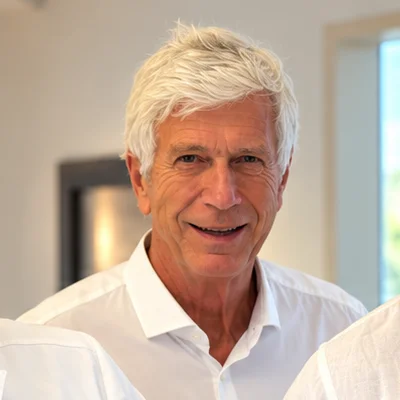
Prof. Dr. Albrecht Molsberger
— Prof. Dr. Albrecht Molsberger · Developer of Axomera therapy, medical director

Axomera is an internationally patented bioelectrical procedure.

How Axomera therapy works →
Our approach

How we proceed with you.

Every therapy needs its own examination — before the Axomera therapy is the precise  Axomera diagnostics.

Axomera diagnostics
  1. Secure the diagnosis and check the influence of taken medication
  2. Clinically clarify whether the symptoms truly arise from the stenosis — and localise pain points in the irritated segment and nerve region
Axomera therapy
  1. 4–6 Axomera treatments, targeted at these points
  2. Goal: significant reduction in pain and hyperexcitability
  3. In favourable progressions: longer pain-reduced walking distance, up to being symptom-free in everyday life

Aims & course of treatment. We cannot guarantee a specific result — the progression is individual. Depending on the course of the condition, fewer or more treatments may be required.

Axomera bioelectrically modulates the body's own signals that control inflammation and regeneration — here, point-by-point along the affected segment and nerve region.

Patients report

Individual cases.

MRI: severe age-related spinal canal narrowing. Two years of low-dose cortisone, NSAIDs, and physiotherapy brought no sufficient improvement — surgery was considered. The patient decided on Axomera therapy. After the second treatment, 500 m walking distance; after the third, 1000 m. Checks every three months; in the event of changes, re-treatment to continue avoiding surgery if possible.
Individual case

Spinal canal stenosis — alternative to surgery.

Patient, 78 — documented individual case from the practice.

Documented individual cases, with patient consent. Individual outcomes differ.

Is Axomera right for me? Initial telephone assessment →
Your treatment team

Who treats you.

Your practitioners
Prof. Dr. med. Albrecht Molsberger

Prof. Dr. med. Albrecht Molsberger

Developer of Axomera therapy · Medical Director

As the developer of Axomera therapy, he oversees the indication and is involved in your treatment personally upon request. His experience in conservative pain medicine informs the planning of your treatment series.

Career history
  • Specialist in Orthopaedics; additional qualifications in Sports Medicine, Acupuncture, Naturopathy
  • Habilitation 2005, adjunct professorship for Orthopaedics at Ruhr University Bochum
  • Conception and management committee of the GERAC studies (German Acupuncture Trials)
  • Development of Axomera therapy since 2008
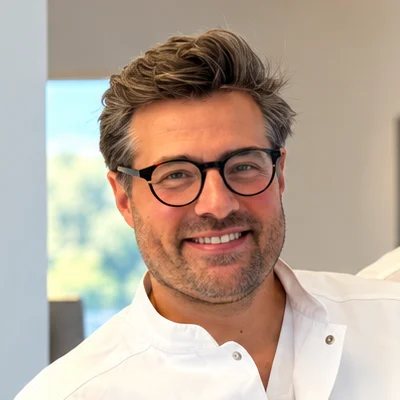
Dr. med. Philipp Schröder

Dr. med. Philipp Schröder

Doctor, orthopaedics & trauma surgery (in specialist training)

Performs your Axomera treatment and accompanies you throughout the entire treatment series. He reviews your findings and assesses whether the procedure is suitable for you. He also participates in the technical development.

Career history
  • Doctor, orthopaedics & trauma surgery (in specialist training); medical degree, Heinrich Heine University Düsseldorf, 2020
  • Doctorate magna cum laude, Ruhr University Bochum (2021): Pain localisation in cluster headache
  • Expert courses in Ultrasound in Pain Medicine (DEGUM curriculum, level I); Expert course in Sports Medicine
  • Technical co-development of Axomera therapy; co-founder of Columbus Health-Products GmbH
Further practitioner
Jonas Becker

Jonas Becker

Doctor, Specialist in Orthopaedics and Trauma Surgery

Organises your previous findings, performs Axomera diagnostics, and accompanies you throughout the entire treatment series. He reviews your findings and, based on his experience, assesses whether the procedure is suitable for you.

Contact · Online reception

Clarify first. Then travel.

Three ways to reach us, around the clock, directly here on the site. For each, you can upload doctor's letters, findings, and MRI images at the same time — encrypted into your file, reviewed by a doctor before we speak.

01 · Telephone

Briefly check if it's a fit.

Ten minutes with a doctor. Free of charge.

  • ·For those who are unsure
  • ·Upload findings beforehand
  • ·No obligation
Select phone appointment →
02 · Video

Consultation on findings without the travel.

Medical assessment via video.

  • ·For patients traveling from further away
  • ·Second opinion before making a decision
  • ·According to GOÄ, amount visible upon booking
Book video appointment →
03 · Practice

Everything in one appointment.

Examination, Axomera diagnostics, plan, costs.

  • ·For all who wish to visit
  • ·The direct route for distances up to about 100 km
  • ·Bring or upload findings
Book appointment →

Are you traveling from further away? Start with 01 or 02. Only when it is clear that Axomera is suitable for you do we plan the journey — condensed into a few days. Available internationally as a concierge service upon request.

Prefer personal contact? Call: +49 211 866880

Our practice treats exclusively by prior appointment.

The telephone initial assessment is not a treatment and does not replace an examination. Whether Axomera is suitable for you will be decided after a medical examination.